Spine Surgery, Disc Herniation & Spinal Cord Tumors
Precision microsurgical techniques designed to decompress neural structures, preserve spinal cord function, and restore mobility safely.
Dr. Amr Ali Hasanain
Consultant Neurosurgeon & Spine Surgeon
MD in Neurosurgery & Spine Surgery - Kasr Alainy, Cairo University
DFMSA in Neurosurgery — Aix-Marseille University, France
Booking & Inquiries
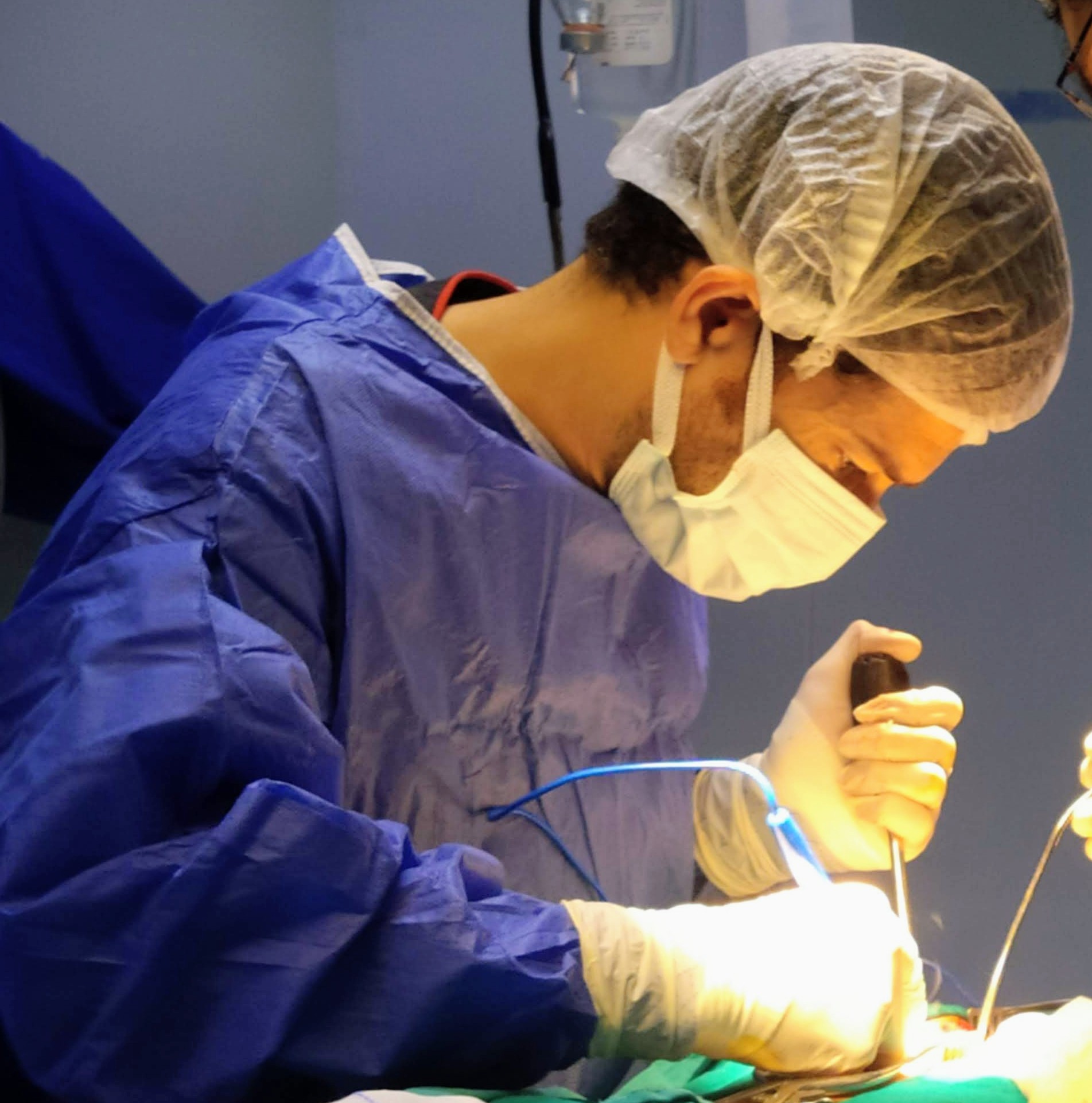
Degenerative Spine & Disc Disorders
- Lumbar Microdiscectomy: Microsurgical removal of herniated lumbar discs to relieve sciatica, lower back pain, and nerve root compression.
- Cervical Disc Surgery: Microsurgical decompression of the cervical spinal cord and nerve roots for neck and arm pain.
- Spinal Canal & Foraminal Stenosis Decompression: Relieving neural compression caused by degenerative spondylosis to restore walking endurance.
- Spinal Fixation & Stabilization: Surgical stabilization for spondylolisthesis, spinal instability, and vertebral fractures.
Spinal Cord Tumors & Surgical Technologies
Spinal canal tumors require advanced microsurgical dissection to separate lesions from delicate neural pathways while preserving motor and sensory function:
- Intramedullary Spinal Cord Tumors: Microsurgical resection of intrinsic spinal cord lesions such as ependymomas and astrocytomas.
- Intradural Extramedullary Tumors: Precision removal of nerve-compressing lesions including spinal meningiomas and schwannomas.
- Extradural & Vertebral Tumors: Spinal cord decompression and column reconstruction for primary and metastatic spinal lesions.
- Intraoperative Neurophysiological Monitoring: Real-time monitoring of spinal cord integrity, nerve roots, and motor/sensory pathways during surgery, particularly during spinal cord tumor resection and decompression procedures.
- Neuronavigation: Image-guided spinal localization to assist with accurate level identification and surgical or instrumentation trajectories in complex cases.
Are you suffering from chronic spine pain or symptoms of spinal cord or nerve compression?
In-person clinical examination of the patient is essential for an accurate medical assessment; following the direct clinical evaluation, imaging studies and MRI scans are reviewed to determine the most appropriate treatment or surgical plan.